
U.S. Households Face 5-Year High Internet Bills

Is the cost of the internet bleeding your wallet dry? FYI, you’re not alone because internet bills are at a 5-year high for U.S. households.
Key Findings
- U.S. households spent a record $164 billion annually on cable and internet services – Broadband Breakfast
- Average U.S. internet bill in 2025 was $75
- The average household pays about $1,063 a year, or $121 per month on cable and internet – Live Now Fox
- Most Americans pay about $10 -$20 extra per month due to hidden fees, which may add up to $240
- The average price across all broadband plans increased by nearly 5% from 2024 to 2025.
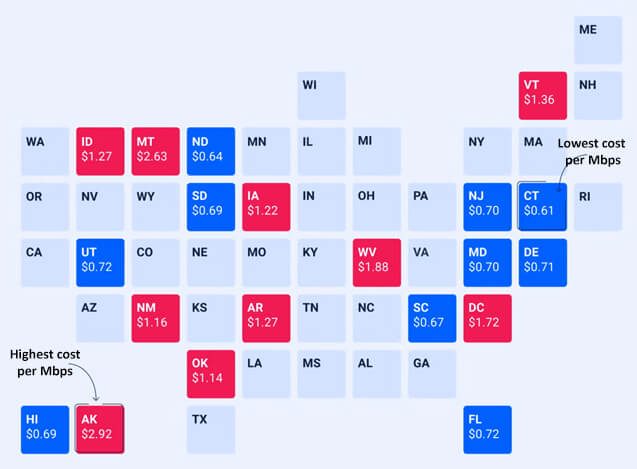
- The state of Alaska has the highest internet cost at almost $3 per Mbps and an average monthly bill close to $104.
- 71% of consumers reported that the price of their home internet has increased over the past year – Telecompetitor
- The average monthly cost for unbundled wired internet was $83.35, and the average monthly cost for unbundled wireless internet was $71.53 through February 2025 – J.D. Power
Surveys suggest that the annual cost of the internet has increased by approximately $200 from last year for most consumers. Additionally, Fox News claims that families are paying $121 on average for cable TV and home internet services per month, which is a lot.
High-speed broadband is an essential for every home today, so giving it up isn’t an option. However, understanding the causes of internet inflation can help us manage and control the situation.
Press Summary
A 2025 analysis of internet pricing across the United States reveals that the average household pays $75 per month, with hidden fees significantly increasing the total annual cost. The study highlights major pricing differences across states and identifies key factors driving rising internet bills.
Methodology
This report analyzes publicly available ISP pricing data and broadband consumer reports & surveys. We also compared base plans, promotional pricing, and additional fees across major U.S. providers. All collected information was used to identify pricing trends and evaluate regional differences.
Why Internet Prices Are Rising?
People are becoming more dependent on the internet over time. A fast and reliable internet connection is necessary for work, entertainment, powering smart homes, and even getting around town.
Internet services are improving and expanding to accommodate growing demands, and the increase in pricing is a mere consequence. Moreover, general inflation that raises the cost of living over time also has a direct impact on the prices of utilities, including the internet.

ISP Investments in Infrastructure Drives Inflation
Many users are ditching conventional cable for fiber internet or 5G Home internet. While both internet technologies have undeniable benefits, they don’t come cheap. Building, operating, and maintaining infrastructures for these internet services on a large scale requires huge capital expenditures or Capex.
Moreover, each type of internet connection involves distinctive equipment at the consumer’s end, as well as component tariffs.When you add up the cost of infrastructure, equipment, and tariffs, the final price charged by your internet provider reflects inflation.
Hidden Fees Add More than $100 to Annual Internet Bills
More often than not, people are unpleasantly surprised when they receive their first internet bill; it is far more than the advertised price of the chosen internet plan. It turns out that the displayed price was solely for the internet service; taxes and other regulatory fees add another $10 – $20 to the bill.
Additionally, equipment charges and the initial installation/setup fee can significantly increase the internet bill. Truth be told, these so-called additional or hidden fees are the norm; you will find everything in the fine print or broadband labels.
Internet Bill Doubles after Promotional Price Ending
Most internet providers offer great introductory rates to lure in new subscribers. Consumers eagerly sign up for the discount without paying attention to the actual price. When the promotional period ends, the rates are reset, and it seems like the internet has become too expensive overnight.
In reality, the internet service wasn’t cheap to begin with; the low price was a bait to get you on board. The standard price can be slightly higher or nearly twice the promotional rate. Aside from the expiration of the introductory rate, annual price hikes happen as with other consumer goods.
Average Internet Bill Crosses $50/month Due to Higher Usage Patterns
Entry-level internet plans cost less, which makes them feasible for households on a tight budget. On the other hand, higher-tier plans are pricier and offer faster internet. To be precise, cheaper internet translates to slower speeds, and that can be a problem.
Large households with 20+ smart devices and multiple heavy internet users cannot run on a basic broadband plan. A family of remote workers, 4K streamers, and hardcore gamers need more speed and bandwidth, so they have to pay a higher price.
Does your internet plan match your household’s speed requirements?
Here’s a complete guide on whether you might want to upgrade or downgrade your plan:
How Much Internet Speed Do I Need? A Guide for Every Household

Rural vs. Urban Internet Price Gap
The cost of the internet may vary by location. If you live in a highly developed urban area that is served by numerous ISPs, you can enjoy competitive prices. In contrast, rural/remote areas have limited options, so the price difference can be staggering.
The digital divide has a significant impact on our internet bills. Underserved regions have to pay more for the same services because of a cut-throat market, geographical challenges, and lack of affordable technology; many rural residents only have access to satellite internet.
Internet Cost Trend (2020–2025)
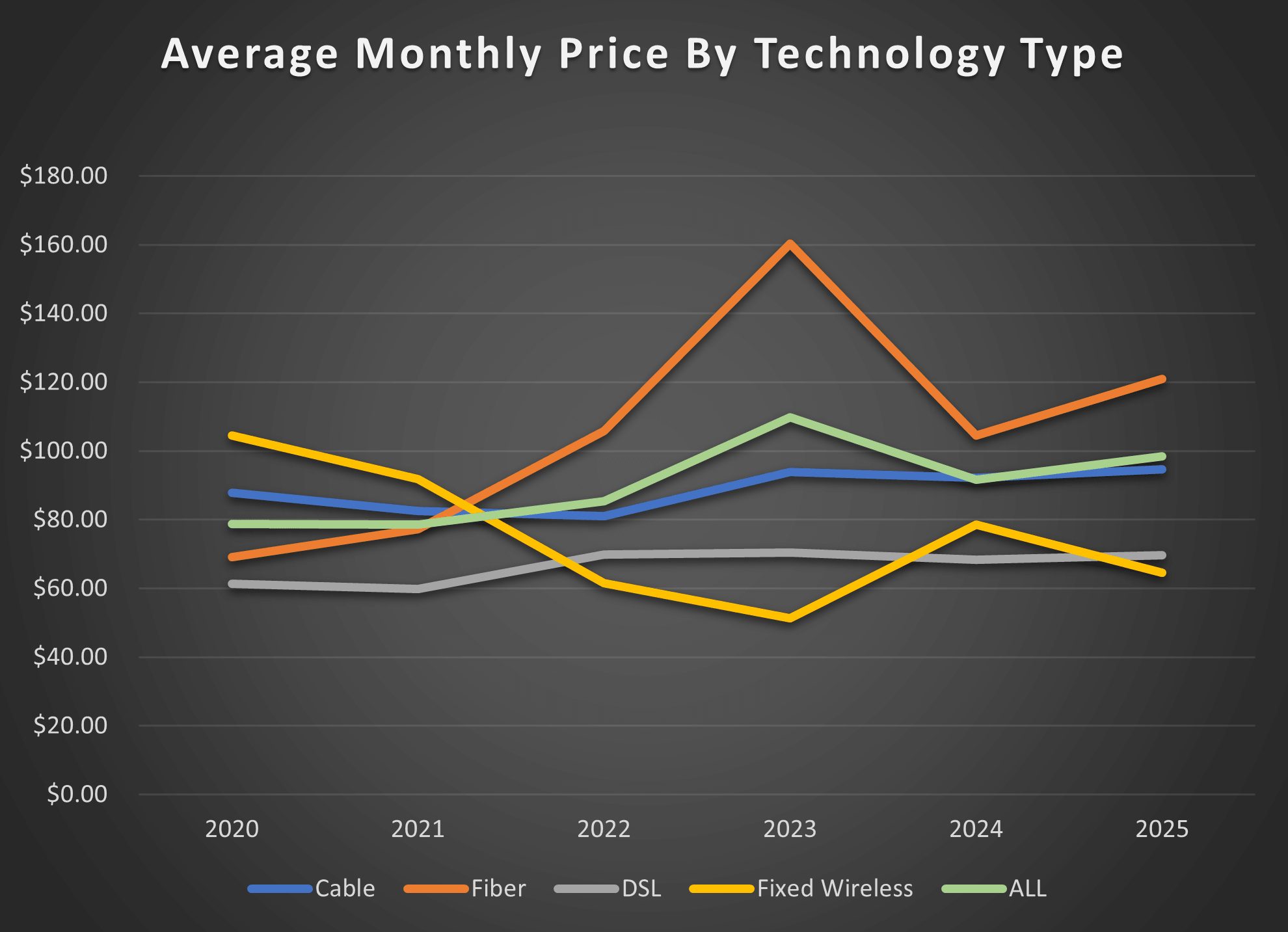
Let’s take a look at how internet costs have fluctuated over the years from 2020 to 2025. Since prices vary by type of internet connection or technology, we’ll compare average monthly rates accordingly:
Key Points:
- The data suggests that fixed wireless was the most expensive form of broadband around 2020, yet became the cheapest by 2025 – this might partially justify the rise in shift towards 5G Home Internet.
- The price of fiber internet peaked in 2023, but declined afterwards, which is probably linked to growing competition between fiber ISPs.
- The price of cable internet is relatively consistent and appears to be in the mid-range by 2025.
- While DSL is obsolete in most areas, the consumer cost hasn’t declined over the years.

Do you feel like you’re paying too much for the internet? As a matter of fact, you’re not alone, and you’re probably right.
State-by-State Internet Cost Breakdown
How much you pay for internet per month also depends on where you live. Some states across the U.S. are more developed than others and have access to more internet options; this makes way for competitive pricing.
On the other hand, states that are less populated and underdeveloped due to geographical and environmental reasons have fewer internet options. Low market competition and a lack of affordable broadband infrastructures cause internet inflation.
Here’s a breakdown of how much consumers pay per Mbps for internet in different states:
| States With the Cheapest Internet: | States With the Most Expensive Internet: |
|---|---|
|
|
Which list did your state make it to? Is the internet in your area affordable? Are the speeds any good?
Learn more about internet availability and performance in this comprehensive resource:
State-by-State Internet Coverage in the U.S. (2026): Which States Are Best Connected

Consumer Response to Internet Inflation
While a $10-$20 increase in a household’s monthly internet bill might not seem too much at first glance, it does add up to a significant amount by the end of the year. Inflation primarily affects low-income households already struggling to make ends meet.
Following the discontinuation of the ACP program, many low-income consumers have cut down broadband expenses by:
- Downgrading their internet plan/settling for slower speeds at a lower price
- Switching to another ISP offering lower rates
- Negotiating with the current provider
- Bill financing/installment plan
- Cancelling home internet services and relying on mobile data
Bonus Tips to Manage Rising Internet Costs
- Review your internet bill and take note of the promotional rate expiration date if applicable.
- Check additional/hidden fees and see where you can save money; for example, using your own modem & router instead of rentals.
- Compare ISPs using our free tool and determine who offers the best value deals in your area; switch services accordingly.
- Figure out your speed needs and run a speed test to see what you’re getting from your provider.
- Consider downgrading to a lower-tier plan if the speeds from your current plan are much more than you need.
- Unsubscribe from unnecessary add-ons.
- Ditch bundled services for a standalone plan, or look for more affordable bundling options.
Implications for ISPs & Policymakers
| What ISPs can do to ease internet inflation: | What policymakers can do to ease internet inflation: |
|---|---|
|
|
Many governments and private organizations are already leading projects to eliminate the digital divide; these include broadband financial assistance programs and free public Wi-Fi facilities.
Similarly, several leading ISPs have introduced affordable internet plans for low-income households that are no longer receiving ACP benefits.
Find Budget-Friendly Internet Providers in Your Area and Sign Up Now!
Future Outlook
The price of utilities and other consumer items goes up every year – it’s just the way things are, and there’s no escaping that. However, we can expect a lower percentage increase in internet bills with respect to growing competition between longstanding and emerging ISPs.
Since wireless internet is comparatively affordable, the expansion of 5G networks can potentially reduce inflation in rural and underserved areas.
For now, consumers can benefit from signing up with ISPs that offer price guarantees. Another option is to enter a long-term contract to enjoy lower pricing for an extended period.
Frequently Asked Questions
What is the average internet bill in the U.S. in 2025?
The average cost of a standalone home internet service in the U.S. is around $77 per month.
Why are my internet bills going up even though my speed hasn’t changed?
How much should I pay for home internet?
Internet requirements vary from household to household, so there is no fixed price to aim for. However, considering typical residential plans and pricing, paying between $50 – $100 per month is standard.
How can I lower my monthly internet bill?
You can lower your monthly internet bill by:
- Negotiating with the provider
- Buying your own equipment instead of leasing/renting
- Downgrading to a lower-tier plan
- Enrolling in a broadband financial assistance program
- Switching to a cheaper ISP
Are there hidden fees in my internet bill?
Your internet bill may contain multiple additional or hidden fees that are not included in the price of the plan. These fees can be mandatory or optional; they include but are not limited to equipment rental fees, service installation/activation charges, and regulatory taxes.
Table of content
- Methodology
- Why Internet Prices Are Rising?
- ISP Investments in Infrastructure Drives Inflation
- Hidden Fees Add More than $100 to Annual Internet Bills
- Internet Bill Doubles after Promotional Price Ending
- Average Internet Bill Crosses $50/month Due to Higher Usage Patterns
- Rural vs. Urban Internet Price Gap
- Internet Cost Trend (2020–2025)
- State-by-State Internet Cost Breakdown
- Consumer Response to Internet Inflation
- Implications for ISPs & Policymakers
- Future Outlook
- Frequently Asked Questions